

The process of election for vice-president of the country has started. There is a straight fight between Venkaiah Naidu BJP candidate and Gopal Gandhi the nominee of the opposition parties. I am not going into the question of who the winner will be. Nor am I going into the question who is the better of two. His tenure as Governor of West Bengal has received Kudos from all sections of Society.
I am here dealing with another aspect i.e. the place of death penalty in a civilized country like ours. This for the reason than when Gopal Gandhi’s name was announced ignoramus persons shouted hoarse against him on the ground that he had asked for commutation of death penalty to imprisonment for life given to Yakub Menon in Bombay blast case resulting in the death of many innocent citizens. Headlines were flashed out to say that Gopal Gandhi wants mercy to the terrorists. This was a mischievous and malicious interpretation of what he had said. It is not denied that Gopal Gandhi has been a long time opponent of death penalty. I recall that about 2 years or so back law Commission of India had held a Seminar on death penalty and whether it should be abolished. I was also one of the speakers — I am for the abolition of death penalty and have written and spoken about it for decades. There almost unanimously a resolution was passed for abolition of death penalty. Consistent with his stand Gopal Gandhi had also voted for abolition of death penalty. In fact for abolitionists like us, the judgment is not based on any individual case, but on the principle that death sentence to any one is inconsistent with a civilized society and does not even serve as deterrent and is violative of human Rights.
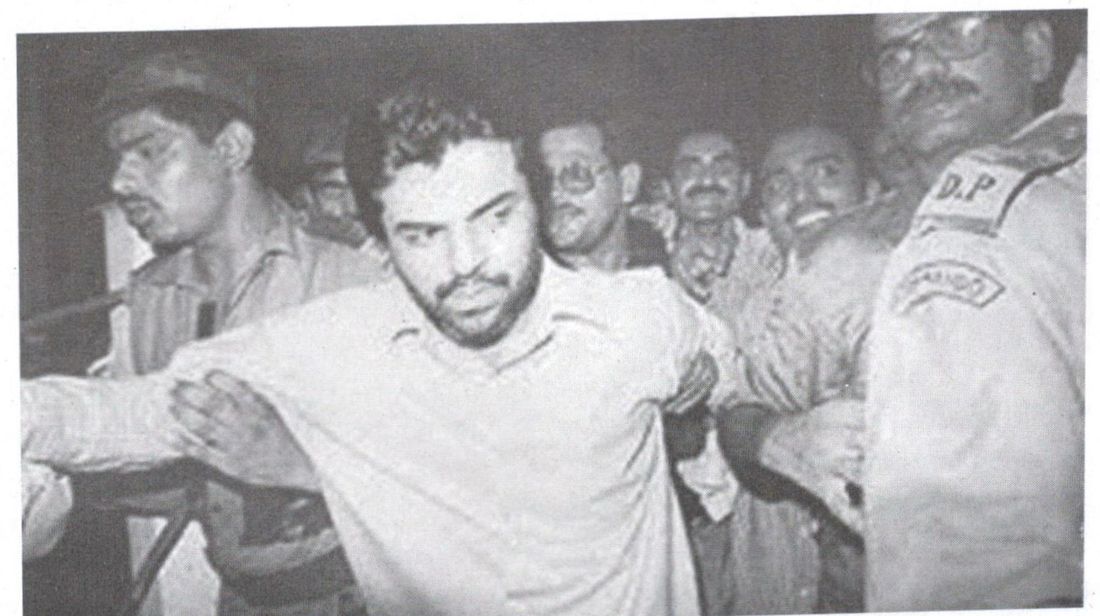 Yakub Abdul Razak Memon
To those infantile critics who made so much noise at Gopal Gandhi’s asking for not hanging Yakub Menon, let us recall that some the greatest men have all opposed death penalty. Thus Gandhiji said; “I do regard death sentence as contrary to ahimsa. Only He can take it who gives it.”
Freedom fighter and Socialist leader Jayaprakash Narayan said, “To my mind, it is ultimately a question of respect for life and human approach to those who commit grievous hurts to others. Death sentence is no remedy for such crimes.”
Dr. Ambedkar during the constituent Assembly debates said, “I think that having regard to this fact, the proper thing for this country to do is to abolish the death sentence altogether.”
The High Commissioner for Human Rights, Louise Arbour called the death penalty “…..a sanction that should have no place in any society that claims to value human rights and the inviolability of the person”.
President Eduardo Frei of Chile said; “I cannot believe that to defend life and punish the person that kills, the State should in its turn kill. The death penalty is as inhuman as the crime which motivates it.”
The vociferous opposition to abolition of death penalty springs from myth that it can lead to increase of murders. Facts show otherwise. Thus, in 1945-50 the State of Travancore, which had no death penalty, had 962 murders whereas during 1950-55, when death sentence was introduced, there were 967 murders.
In Canada, after the abolition of death penalty in 1976, the homicide rate has declined. In 2000, there were 542 homicides in Canada — 16 less than in 1998 and 159 less than in 1975 (one year prior to the abolition of capital punishment).
In 1997, the Attorney General of Massachusetts (USA) said, “there is not a shred of credible evidence that the death penalty lowers the murder rate. In fact, without the death penalty the murder rate in Massachusetts is about half the national average.”
The death penalty has been abolished since 1965 in U.K. The membership of European Union is dependent on having no death penalty. This has been done obviously in the confidence that murders do not get automatically reduced by retaining death penalty.
The South African Constitutional Court unanimously ruled in 1995 that the death penalty was unconstitutional as it constitutes “cruel, inhuman or degrading treatment or punishment”.
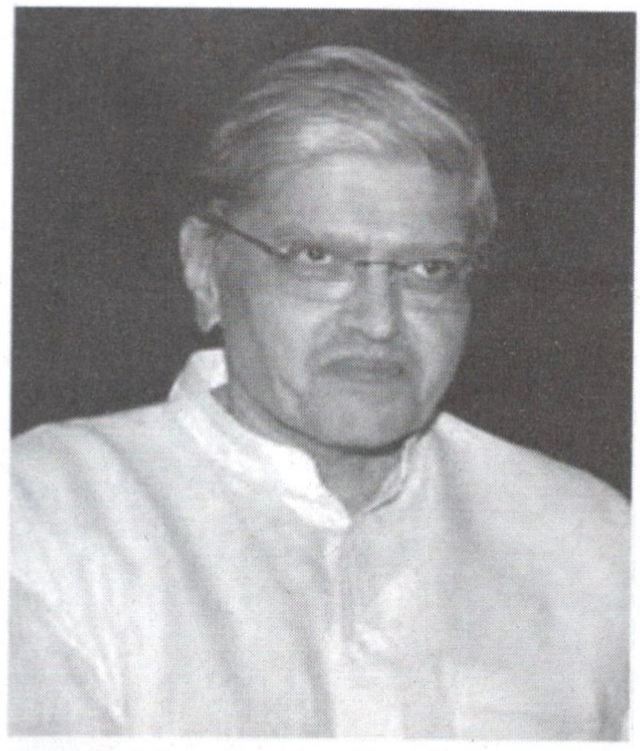 Gopalkrishna Devdas Gandhi
At present 105 countries have abolished death penalty in law for all crimes — a majority of world states, as of April 2017.
I may also remind critics of Gopal Gandhi that when India wanted Abdul Salem for proceedings against him for the same offence of blast of 1993 in Mumbai and who was then living in Portugal, government of India gave undertaking that no death penalty would be carried out on him and that is why though convicted be has been given life sentence.
The injustice of death as a penalty has a hoary past. Although the death penalty was briefly banned in China between 747 and 759, modern opposition to the death penalty stems from the book of the Italian Cesare Beccaria Dei Delitti e Delle Pene (“On Crimes and Punishments”), published in 1764. Influenced by the book, Grand Duke Leopold II of Habsburg, famous enlightened monarch and future Emperor of Austria, abolished the death penalty in the then-independent Granducato di Toscana (Tuscany), the first permanent abolition in modern times. On 30 November 1786, after having de facto blocked capital executions (the last was in 1769), Leopold promulgated the reform of the penal code that abolished the death penalty and ordered the destruction of all the instruments for capital execution in his land. In 2000 Tuscany’s regional authorities instituted an annual holiday on 30 November to commemorate the event. The event is also commemorated on this day by 300 cities around the world celebrating the Cities for the Life Day.
In 1849, the Roman Republic became the first country to ban the capital punishment in its constitution. Venezuela abolished the death penalty in 1863 and Portugal did so in 1867.
Will the critics of Gopal Gandhi have the normal courtesy of apologizing for their totally mischievous unsustainable comments.
Background panels printed with the article
The following shaded reference panels appear in the magazine alongside Justice Sachar’s article. They are set apart here to preserve the scan without attributing their wording to him.
Capital punishment
Capital punishment, also known as the death penalty, is a government sanctioned practice whereby a person is put to death by the state as a punishment for a crime. The sentence that someone be punished in such a manner is referred to as a death sentence, whereas the act of carrying out the sentence is known as an execution. Crimes that are punishable by death are known as capital crimes or capital offences, and they commonly include offences such as murder, treason, espionage, war crimes, crimes against humanity and genocide. Etymologically, the term capital (lit. “of the head”, derived via the Latin capitalis from caput, “head”) in this context alluded to execution by beheading.
Fifty-six countries retain capital punishment, 103 countries have completely abolished it de jure for all crimes, six have abolished it for ordinary crimes (while maintaining it for special circumstances such as war crimes), and 30 are abolitionist in practice.
Capital punishment is a matter of active controversy in various countries and states, and positions can vary within a single political ideology or cultural region. In the European Union, Article 2 of the Charter of Fundamental Rights of the European Union prohibits the use of capital punishment. Also, the Council of Europe, which has 47 member states, prohibits the use of the death penalty by its members.
The United Nations General Assembly has adopted, in 2007, 2008, 2010, 2012 and 2014, non-binding resolutions calling for a global moratorium on executions, with a view to eventual abolition. Although most nations have abolished capital punishment, over 60% of the world’s population live in countries where executions take place, such as China, India, the United States and Indonesia.
Capital punishment in India
Capital punishment is a legal penalty in India. It has been carried out in five instances since 1995, while a total of twenty-six executions have taken place in India since 1991.
The Supreme Court in Mithu vs. State of Punjab struck down Section 303 of the Indian Penal Code, which provided for a mandatory death sentence for offenders serving a life sentence. The number of people executed in India since the nation achieved Independence in 1947 is a matter of dispute; official government statistics claim that fifty-two people had been executed since Independence. However, research by the People’s Union for Civil Liberties indicates that the actual number of executions is in fact much higher, as they located records of 1,422 executions in the decade from 1953 to 1963 alone. Research published by National Law University, Delhi on death row convicts since 2000 had found that of the 1,617 prisoners sentenced to death by trial courts in India, capital punishment was confirmed in only seventy-one cases. NLU Delhi confirmed 755 executions in India since 1947. National Law University, Delhi examined 1,414 prisoners who were executed, in the available list of convicts hanged in post-Independence since 1947. According to a report of the Law Commission of India (1967), the total number of cases in which the sentence of death in India was executed from 1953 to 1963 was 1,410.
In December 2007, India voted against a United Nations General Assembly resolution calling for a moratorium on the death penalty. In November 2012, India again upheld its stance on capital punishment by voting against the UN General Assembly draft resolution seeking to end the institution of capital punishment globally.
On 31 August 2015, the Law Commission of India submitted a report to the government which recommended the abolition of capital punishment for all crimes in India, excepting the crime of waging war against the nation or for terrorism-related offences.
In colonial India, death was prescribed as one of the punishments in the Indian Penal Code, 1860 (IPC), which listed a number of capital crimes. It remained in effect after independence in 1947. The first hanging in Independent India was that of Nathuram Godse and Narayan Apte in the Mahatma Gandhi assassination case on 15 Nov.1949.
Under Article 21 of the Constitution of India, no person can be deprived of his life except according constitutional validity of Section 364A of the Indian Penal Code.
In addition to the Indian Penal Code, a series of legislation enacted by the Parliament of India have provisions for the death penalty.
The Death Penalty Worldwide
According to Amnesty International, as of July 2015, 101 countries have abolished the death penalty for all crimes in law, while 140 countries have abolished the death penalty in law or practice. At least 607 executions were carried out worldwide in 2014, a decrease of almost 22% compared to the figures recorded for 2013. Executions were recorded in 22 countries in 2014, the same number as 2013. This is a significant decrease from 20 years ago in 1995, when there were executions in 42 countries, highlighting the clear global trend of states moving away from the death penalty. Three countries have signed treaties to abolish the death penalty, but not have not yet ratified them: Angola, Madagascar, Sao Tome and Principe.
The author is Chief Justice (Retd.), High Court of Delhi.
Source: South Asia Politics, September 2017, Vol. 16, No. 5, printed pages 15–17 (four-page PDF including magazine cover).


